Most "case studies" show one big number and skip everything in between.
This one shows every step, straight from a real landscaping client's GoHighLevel pipeline in Illinois.
The numbers, step by step
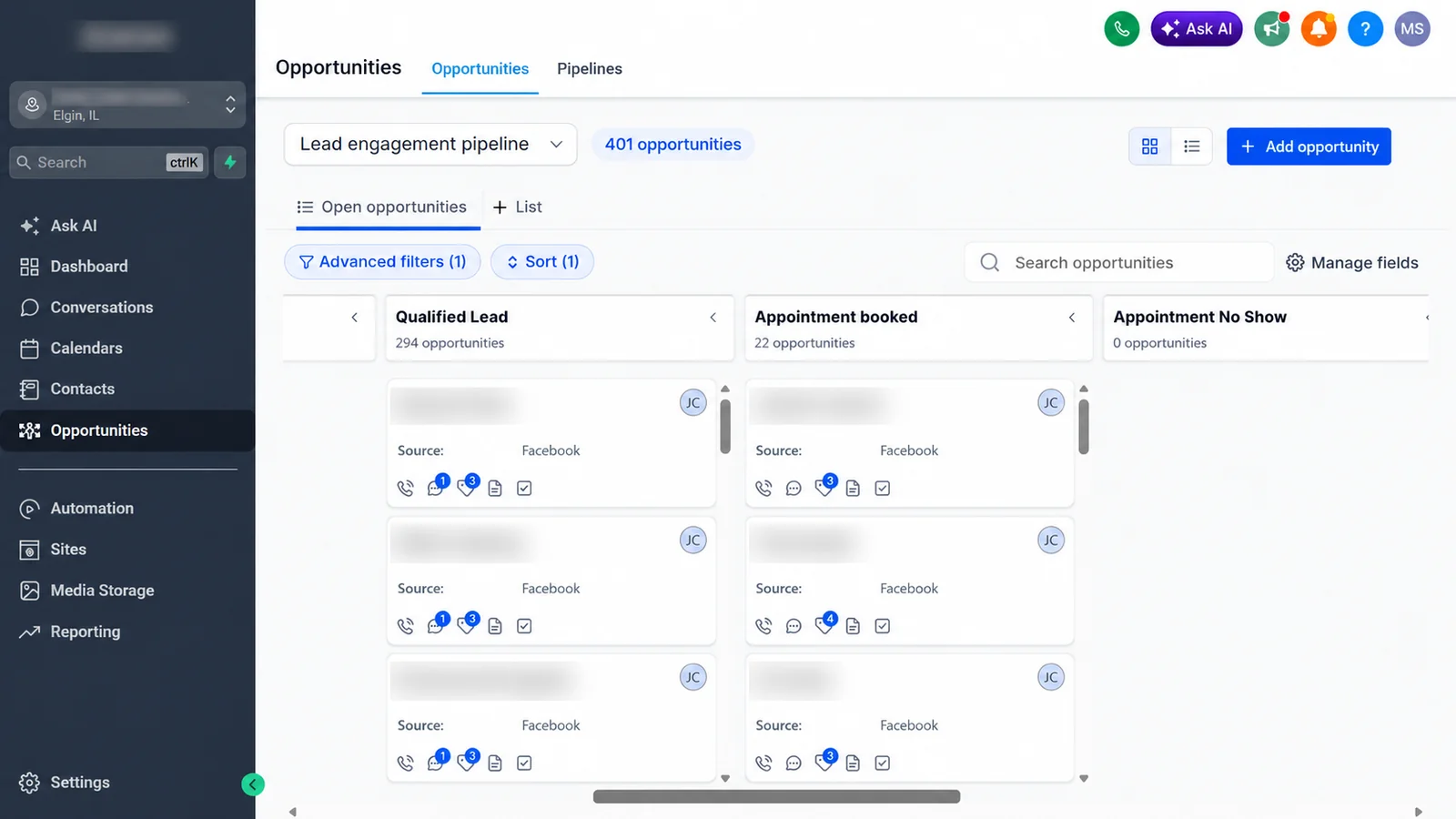
What those numbers really mean
- 73% of leads were qualified. 294 out of 401 were the right fit and in the right area. The targeting and the offer were doing their job.
- About $656 to win each customer. Against roughly $4,875 in revenue per customer, that's an easy trade.
- About $7 back for every $1 spent. $78,000 in revenue from $10,500 in ads.
Why tracking every lead mattered
Every lead from the ads went into one GoHighLevel pipeline. That's the only reason these numbers exist.
Without it, you'd know you spent $10,500 and "got some jobs." With it, you know exactly:
- How many leads came in, and how many were worth calling
- How many turned into booked visits
- How much revenue those visits brought in
That's how you decide, with confidence, whether to spend more.
What you can take from this
- Judge ads by customers and revenue, not clicks. A $26 lead means nothing until it becomes a paying job.
- Put every lead in one place. A simple pipeline shows you exactly where people drop off.
- The step from qualified lead to booked visit is where the money is. 294 qualified leads turned into 22 appointments. Faster, more persistent follow-up is the biggest lever most businesses have. Here's why speed matters so much.
Common questions
Do Facebook ads work for landscaping companies?
They can work very well. In this case, a landscaping client turned $10,500 in Meta ad spend into 401 leads, 16 paying customers and $78,000 in revenue.
What is a good cost per lead for landscaping?
In the landscaping accounts I manage, quality leads usually cost around $30–35. In this case study it was about $26.
What is a good return on ad spend for a landscaper?
It depends on your job sizes and margins. This client got about 7.4x: $78,000 in revenue from $10,500 in ads.
How do you track which ads turn into customers?
Put every lead into one CRM pipeline, such as GoHighLevel, and move each one through stages: lead, qualified, appointment, customer.

Want me to look at your ads?
Send me your ad account or website. I'll review it personally and tell you the first 3 things I'd fix. Free, no strings attached.